rosa
Page categories
Albanian
Noun
rosa
- inflection of rosë:
- definite nominative singular
- indefinite nominative/accusative plural
Aragonese
Etymology
Noun
rosa f (plural rosas)
- rose (flower)
References
- Bal Palazios, Santiago (2002), “rosa”, in Dizionario breu de a luenga aragonesa, Zaragoza, →ISBN
Asturian
Etymology
Pronunciation
- IPA(key): /ˈrosa/ [ˈro.sa]
- Rhymes: -osa
- Syllabification: ro‧sa
Noun
rosa f (plural roses)
- rose (flower)
Noun
rosa m (plural roses)
- rose (colour)
Bavarian
Etymology
Pronunciation
- IPA(key): /ˈroː.sɐ/
Audio: (file)
Adjective
rosa
- pink (color/colour)
See also
| weiß | grau | schwoarz |
| roud/rod | oransch/orange; braun | gejb/gölb/gööb |
| grea/grean | ||
| blau | blau | |
| lila, violett | lila | rosa |
Catalan
Etymology
Pronunciation
- IPA(key): (Central, Balearic) [ˈrɔ.zə]
- IPA(key): (Valencia) [ˈrɔ.za]
Audio (Valencia): (file) Audio (Catalonia): (file)
Noun
rosa f (plural roses)
- rose (a flower of the rose plant)
Derived terms
- malva-rosa
- rosa de Jericó
- rosa de roca
- rosa del desert
- rosa dels vents
- rosella
- rosenc
- roser
- roseta
Related terms
Noun
rosa m (plural roses)
- rose (a purplish-red or pink colour)
Adjective
rosa (invariable)
- pink (color/colour)
See also
| blanc | gris | negre |
| roig, vermell; carmesí | taronja; marró | groc; crema |
| verd llima | verd | |
| cian; xarxet | atzur | blau |
| violat; indi | magenta; lila, porpra | rosa |
Further reading
- “rosa”, in Diccionari de la llengua catalana [Dictionary of the Catalan Language] (in Catalan), second edition, Institute of Catalan Studies [Catalan: Institut d'Estudis Catalans], April 2007
- “rosa”, in Gran Diccionari de la Llengua Catalana, Grup Enciclopèdia Catalana, 2026
- “rosa” in Diccionari normatiu valencià, Acadèmia Valenciana de la Llengua.
- Alcover, Antoni Maria; Moll, Francesc de Borja (1963), “rosa”, in Diccionari català-valencià-balear (in Catalan)
Cebuano
Etymology
From Spanish rosa, from Latin rosa, probably from Ancient Greek ῥόδον (rhódon).
Pronunciation
- Hyphenation: ro‧sa
Noun
rosa
Adjective
rosa
- pink (color/colour)
Classical Nahuatl
Etymology
From Spanish rosa, from Latin rosa.
Noun
rosa
- rose
- Synonym: Caxtillan xochitl
- 1555, Alonso de Molina, Aqui comienca vn vocabulario en la lengua Castellana y Mexicana:
- Flor o roſa de caſtilla. caſtillan xuchitl. Roſa.
- (please add an English translation of this quotation)
Cornish
Etymology
From roos (“net”) + -a. Compare Welsh rhwydo.
Verb
rosa
Conjugation
| singular | plural | impersonal | ||||||||||||||||||||||||||||||||||||||||||||||||||||||||||||||||||||||||||||||||||||||||||||||||
|---|---|---|---|---|---|---|---|---|---|---|---|---|---|---|---|---|---|---|---|---|---|---|---|---|---|---|---|---|---|---|---|---|---|---|---|---|---|---|---|---|---|---|---|---|---|---|---|---|---|---|---|---|---|---|---|---|---|---|---|---|---|---|---|---|---|---|---|---|---|---|---|---|---|---|---|---|---|---|---|---|---|---|---|---|---|---|---|---|---|---|---|---|---|---|---|---|---|---|
| first | second | third | first | second | third | |||||||||||||||||||||||||||||||||||||||||||||||||||||||||||||||||||||||||||||||||||||||||||||
| indicative | present/future | rosav | rosydh | ros | rosyn | rosowgh | rosons | rosir | ||||||||||||||||||||||||||||||||||||||||||||||||||||||||||||||||||||||||||||||||||||||||||
| preterite | rosis | rossys | rosas | rossyn | rossowgh | rossons | rosas | |||||||||||||||||||||||||||||||||||||||||||||||||||||||||||||||||||||||||||||||||||||||||||
| imperfect | rosen | roses | rosa | rosen | rosewgh | rosens | rosys | |||||||||||||||||||||||||||||||||||||||||||||||||||||||||||||||||||||||||||||||||||||||||||
| pluperfect | rossen | rosses | rossa | rossen | rossewgh | rossens | rossys | |||||||||||||||||||||||||||||||||||||||||||||||||||||||||||||||||||||||||||||||||||||||||||
| subjunctive | present/future | rossiv | rossi | rosso | rossyn | rossowgh | rossons | rosser | ||||||||||||||||||||||||||||||||||||||||||||||||||||||||||||||||||||||||||||||||||||||||||
| imperfect | rossen | rosses | rossa | rossen | rossewgh | rossens | rossys | |||||||||||||||||||||||||||||||||||||||||||||||||||||||||||||||||||||||||||||||||||||||||||
| imperative | — | ros | roses | rosyn | rosewgh | rosens | — | |||||||||||||||||||||||||||||||||||||||||||||||||||||||||||||||||||||||||||||||||||||||||||
| non-finites | present participle | verbal adjective | ||||||||||||||||||||||||||||||||||||||||||||||||||||||||||||||||||||||||||||||||||||||||||||||||
| ow rosa | rosys | |||||||||||||||||||||||||||||||||||||||||||||||||||||||||||||||||||||||||||||||||||||||||||||||||
Czech
Etymology
From Old Czech rosa, from Proto-Slavic *rosà, from Proto-Indo-European *h₁rṓs.
Pronunciation
- IPA(key): [ˈrosa]
- Hyphenation: ro‧sa
- Rhymes: -osa
Noun
rosa f
Declension
Derived terms
Further reading
- “rosa”, in Příruční slovník jazyka českého (in Czech), 1935–1957
- “rosa”, in Slovník spisovného jazyka českého (in Czech), 1960–1971, 1989
- “rosa”, in Internetová jazyková příručka (in Czech), 2008–2026
Danish
Etymology
Adjective
rosa (indeclinable)
- rose-coloured, rose
- Synonym: rosafarvet
See also
| hvid | grå | sort |
| rød; højrød, mørkerød | orange; brun | gul; flødefarvet |
| lime, lysegrøn | grøn, mørkegrøn | mintgrøn |
| cyan; turkis, lyseblå | azurblå, himmelblå | blå, mørkeblå |
| violet; indigo | magenta; lilla | lyserød, rosa |
References
- “rosa” in Den Danske Ordbog
Galician
Etymology
Pronunciation
- IPA(key): /ˈrɔsa/ [ˈrɔ.s̺ɐ]
- Rhymes: -ɔsa
Noun
rosa f (plural rosas)
Derived terms
See also
| branco | gris | negro, preto |
| vermello; carmín | laranxa; castaño, marrón | amarelo; crema |
| verde lima | verde | menta; verde escuro |
| ciano; azul verdoso | cerúleo | azul |
| violeta; anil | maxenta; púrpura | rosa |
Gallurese
Alternative forms
- irrosa
Etymology
From Latin rosa, of disputed origin.
Pronunciation
- IPA(key): /ˈrɔza/
Noun
rosa f (plural rosi)
- rose (flower)
Derived terms
- rosa aresta
- rosa di mucchju
- rosaredda
Related terms
- rusetu
Noun
rosa m (uncountable)
- pink (color/colour)
Related terms
- rusulinu
Adjective
rosa (invariable)
- pink (color/colour)
References
- Rubattu, Antoninu (2006), Dizionario universale della lingua di Sardegna, 2nd edition, Sassari: Edes
German
Etymology
Pronunciation
Adjective
rosa (indeclinable) or (informal)
rosa (strong nominative masculine singular rosaner or (now rare) rosaer, comparative rosaner, superlative am rosansten or (now rare) am rosasten)
Usage notes
- The adjective is usually treated as invariable in the formal standard language, thus neither declined forms nor comparative forms are used.
- rosa also has normal inflected forms. An -n- is then infixed before (vocalic) endings. Additionally, it has also inflected forms without an infix. Compare the same in lila.
Declension
| number & gender | singular | plural | |||
|---|---|---|---|---|---|
| masculine | feminine | neuter | |||
| predicative | er ist rosa | sie ist rosa | es ist rosa | sie sind rosa | |
| strong declension (without article) |
nominative | rosaner rosaer1 |
rosane rosae1 |
rosanes rosaes1 |
rosane rosae1 |
| genitive | rosanen rosaen1 |
rosaner rosaer1 |
rosanen rosaen1 |
rosaner rosaer1 | |
| dative | rosanem rosaem1 |
rosaner rosaer1 |
rosanem rosaem1 |
rosanen rosaen1 | |
| accusative | rosanen rosaen1 |
rosane rosae1 |
rosanes rosaes1 |
rosane rosae1 | |
| weak declension (with definite article) |
nominative | der rosane der rosae1 |
die rosane die rosae1 |
das rosane das rosae1 |
die rosanen die rosaen1 |
| genitive | des rosanen des rosaen1 |
der rosanen der rosaen1 |
des rosanen des rosaen1 |
der rosanen der rosaen1 | |
| dative | dem rosanen dem rosaen1 |
der rosanen der rosaen1 |
dem rosanen dem rosaen1 |
den rosanen den rosaen1 | |
| accusative | den rosanen den rosaen1 |
die rosane die rosae1 |
das rosane das rosae1 |
die rosanen die rosaen1 | |
| mixed declension (with indefinite article) |
nominative | ein rosaner ein rosaer1 |
eine rosane eine rosae1 |
ein rosanes ein rosaes1 |
(keine) rosanen (keine) rosaen1 |
| genitive | eines rosanen eines rosaen1 |
einer rosanen einer rosaen1 |
eines rosanen eines rosaen1 |
(keiner) rosanen (keiner) rosaen1 | |
| dative | einem rosanen einem rosaen1 |
einer rosanen einer rosaen1 |
einem rosanen einem rosaen1 |
(keinen) rosanen (keinen) rosaen1 | |
| accusative | einen rosanen einen rosaen1 |
eine rosane eine rosae1 |
ein rosanes ein rosaes1 |
(keine) rosanen (keine) rosaen1 | |
1Now rare.
| number & gender | singular | plural | |||
|---|---|---|---|---|---|
| masculine | feminine | neuter | |||
| predicative | er ist rosaner | sie ist rosaner | es ist rosaner | sie sind rosaner | |
| strong declension (without article) |
nominative | rosanerer | rosanere | rosaneres | rosanere |
| genitive | rosaneren | rosanerer | rosaneren | rosanerer | |
| dative | rosanerem | rosanerer | rosanerem | rosaneren | |
| accusative | rosaneren | rosanere | rosaneres | rosanere | |
| weak declension (with definite article) |
nominative | der rosanere | die rosanere | das rosanere | die rosaneren |
| genitive | des rosaneren | der rosaneren | des rosaneren | der rosaneren | |
| dative | dem rosaneren | der rosaneren | dem rosaneren | den rosaneren | |
| accusative | den rosaneren | die rosanere | das rosanere | die rosaneren | |
| mixed declension (with indefinite article) |
nominative | ein rosanerer | eine rosanere | ein rosaneres | (keine) rosaneren |
| genitive | eines rosaneren | einer rosaneren | eines rosaneren | (keiner) rosaneren | |
| dative | einem rosaneren | einer rosaneren | einem rosaneren | (keinen) rosaneren | |
| accusative | einen rosaneren | eine rosanere | ein rosaneres | (keine) rosaneren | |
| number & gender | singular | plural | |||
|---|---|---|---|---|---|
| masculine | feminine | neuter | |||
| predicative | er ist am rosansten er ist am rosasten1 |
sie ist am rosansten sie ist am rosasten1 |
es ist am rosansten es ist am rosasten1 |
sie sind am rosansten sie sind am rosasten1 | |
| strong declension (without article) |
nominative | rosanster rosaster1 |
rosanste rosaste1 |
rosanstes rosastes1 |
rosanste rosaste1 |
| genitive | rosansten rosasten1 |
rosanster rosaster1 |
rosansten rosasten1 |
rosanster rosaster1 | |
| dative | rosanstem rosastem1 |
rosanster rosaster1 |
rosanstem rosastem1 |
rosansten rosasten1 | |
| accusative | rosansten rosasten1 |
rosanste rosaste1 |
rosanstes rosastes1 |
rosanste rosaste1 | |
| weak declension (with definite article) |
nominative | der rosanste der rosaste1 |
die rosanste die rosaste1 |
das rosanste das rosaste1 |
die rosansten die rosasten1 |
| genitive | des rosansten des rosasten1 |
der rosansten der rosasten1 |
des rosansten des rosasten1 |
der rosansten der rosasten1 | |
| dative | dem rosansten dem rosasten1 |
der rosansten der rosasten1 |
dem rosansten dem rosasten1 |
den rosansten den rosasten1 | |
| accusative | den rosansten den rosasten1 |
die rosanste die rosaste1 |
das rosanste das rosaste1 |
die rosansten die rosasten1 | |
| mixed declension (with indefinite article) |
nominative | ein rosanster ein rosaster1 |
eine rosanste eine rosaste1 |
ein rosanstes ein rosastes1 |
(keine) rosansten (keine) rosasten1 |
| genitive | eines rosansten eines rosasten1 |
einer rosansten einer rosasten1 |
eines rosansten eines rosasten1 |
(keiner) rosansten (keiner) rosasten1 | |
| dative | einem rosansten einem rosasten1 |
einer rosansten einer rosasten1 |
einem rosansten einem rosasten1 |
(keinen) rosansten (keinen) rosasten1 | |
| accusative | einen rosansten einen rosasten1 |
eine rosanste eine rosaste1 |
ein rosanstes ein rosastes1 |
(keine) rosansten (keine) rosasten1 | |
1Now rare.
Descendants
See also
- pink (used in German for stronger shades only)
Further reading
Irish
Noun
rosa
- inflection of ros (“headland”):
- genitive singular
- nominative/vocative/dative plural
Italian
Etymology 1
Pronunciation
- IPA(key): /ˈrɔ.za/
- Rhymes: -ɔza
- Hyphenation: rò‧sa
Noun
rosa f (plural rose, diminutive (uncommon) rosèlla or rosellìna (diminutive of diminutive) or rosétta or rosettìna (diminutive of diminutive))
Noun
rosa m (invariable)
Adjective
rosa (invariable)
- pink (color/colour)
- romantic (of movies, books, etc.)
- (relational) gossip (of news, magazines, etc.)
Related terms
See also
| bianco | argento; grigio | nero |
| rosso; cremisi | arancione; marrone; bronzo | giallo; oro; crema |
| verde chiaro; limetta | verde | verde acqua; acquamarina; verde menta; verde menta scuro |
| ciano; azzurro; celeste; blu petrolio; foglia di tè | azzurro; celeste; celeste scuro | blu; blu scuro |
| violetto; indaco | magenta; viola | rosa; fucsia; porpora |
Etymology 2
Past participle of rodere.
Pronunciation
- IPA(key): /ˈro.za/, (traditional) /ˈro.sa/
- Rhymes: -oza, (traditional) -osa
- Hyphenation: ró‧sa
Participle
rosa f sg
- feminine singular of roso
Etymology 3
Pronunciation
- IPA(key): /ˈro.za/, (traditional) /ˈro.sa/
- Rhymes: -oza, (traditional) -osa
- Hyphenation: ró‧sa
Noun
rosa f (plural rose)
Anagrams
Latin
Etymology 1
Probably derived from a variant of Ancient Greek ῥόδον (rhódon), but some of the details remain mysterious. Possibly via another Italic language like Oscan, or alternatively via the Aeolic version of ῥοδέᾱ (rhodéā, “rose-bush”) which would have been *ῥοζά (*rhozá).[1]
Pronunciation
- rosa:
- (Classical Latin) IPA(key): [ˈrɔ.sa]
- (modern Italianate Ecclesiastical) IPA(key): [ˈrɔː.s̬a]
- rosā:
- (Classical Latin) IPA(key): [ˈrɔ.saː]
- (modern Italianate Ecclesiastical) IPA(key): [ˈrɔː.s̬a]
Noun
rosa f (genitive rosae); first declension
- rose (plant of the genus Rosa or its flower)
- 61 CE – c. 112 CE, Plinius Minor, Epistulae 5:
- Inde etiam rosas effert, umbrarumque frigus non ingrato sole distinguit. Finito vario illo multiplicique curvamine recto limiti redditur nec huic uni, nam viae plures intercedentibus buxis dividuntur.[2][3]
- Farther on, there are roses too along the path, and the cool shade is pleasantly alternated with sunshine. Having passed through these manifold winding alleys, the path resumes a straight course, and at the same time divides into several tracks, separated by box hedges.[4][5]
Even roses grow there, and the warmth of the sun is delightful as a change from the cool of the shade. When you come to the end of these various winding alleys, the boundary again runs straight, or should I say boundaries, for there are a number of paths with box shrubs between them.[6]
- Farther on, there are roses too along the path, and the cool shade is pleasantly alternated with sunshine. Having passed through these manifold winding alleys, the path resumes a straight course, and at the same time divides into several tracks, separated by box hedges.[4][5]
- Inde etiam rosas effert, umbrarumque frigus non ingrato sole distinguit. Finito vario illo multiplicique curvamine recto limiti redditur nec huic uni, nam viae plures intercedentibus buxis dividuntur.[2][3]
- (transferred sense) dear, rose, sweetheart, love (word of endearment)
- mea rosa ― my rose
Usage notes
- In Roman and medieval usage the word, when it meant a garden rose, referred to a type of rose now known as the apothecary rose. The garden roses that are known today were not known to the Romans.
Declension
First-declension noun.
| singular | plural | |
|---|---|---|
| nominative | rosa | rosae |
| genitive | rosae | rosārum |
| dative | rosae | rosīs |
| accusative | rosam | rosās |
| ablative | rosā | rosīs |
| vocative | rosa | rosae |
Related terms
Descendants
- Borrowings
- → Basque: arrosa
- → Proto-Brythonic: *rros
- → Old French: rose
- → German: rosa (“pink”) (see there for further descendants)
- → Proto-West Germanic: *rōsā (see there for further descendants)
- → Hungarian: rózsa
- → Luxembourgish: rosa
- → Romanian: roză
- → Old Church Slavonic: рожа (roža) (see there for further descendants)
Unsorted borrowings
- → Bulgarian: роза (roza)
- → Dutch: roze
- → North Frisian:
- → West Frisian: rôze
- → Ladino: roz
- → Lingala: roze
- → Lithuanian: rožė
- → Macedonian: роза (roza)
- → Malay: ros
- → Northern Sami: ruvsu
- → Polish: róż
- → Russian: ро́за (róza)
- → Rwanda-Rundi: iroza
- → Samogitian: ruožė
- → Silesian: rołza
- → Tongan: lose
- → Ukrainian: роза (roza)
- → Veps: ruza
- → Voro: roosa
Noun
rosā
- ablative singular of rosa
Etymology 2
See the etymology of the corresponding lemma form.
Pronunciation
- rōsa:
- (Classical Latin) IPA(key): [ˈroː.sa]
- (modern Italianate Ecclesiastical) IPA(key): [ˈrɔː.s̬a]
- rōsā:
- (Classical Latin) IPA(key): [ˈroː.saː]
- (modern Italianate Ecclesiastical) IPA(key): [ˈrɔː.s̬a]
Participle
rōsa
- inflection of rōsus:
- nominative/vocative feminine singular
- nominative/accusative/vocative neuter plural
Participle
rōsā
- ablative feminine singular of rōsus
References
- ^ Walde, Alois; Hofmann, Johann Baptist (1954), “rosa”, in Lateinisches etymologisches Wörterbuch (in German), 3rd edition, volume 2, Heidelberg: Carl Winter, page 443
- ^ Pliny text, Latin version
- ^ Pliny text, Latin version 2
- ^ Pliny text, English translation 1
- ^ Pliny text, English translation 2
- ^ Pliny text, alternative English translation
Further reading
- “rosa”, in Charlton T. Lewis and Charles Short (1879), A Latin Dictionary, Oxford: Clarendon Press
- “rosa”, in Charlton T. Lewis (1891), An Elementary Latin Dictionary, New York: Harper & Brothers
- "rosa", in Charles du Fresne du Cange, Glossarium Mediæ et Infimæ Latinitatis (augmented edition with additions by D. P. Carpenterius, Adelungius and others, edited by Léopold Favre, 1883–1887)
- “rosa”, in Gaffiot, Félix (1934), Dictionnaire illustré latin-français, Hachette.
Latvian
Noun
rosa f (4 declension)
Lower Sorbian
Etymology
From Proto-Slavic *rosà, from Proto-Indo-European *h₁rṓs.
Pronunciation
- IPA(key): /ˈrɔsa/
Noun
rosa f (diminutive roska)
Declension
Further reading
- Muka, Arnošt (1921, 1928), “rosa”, in Słownik dolnoserbskeje rěcy a jeje narěcow (in German), St. Petersburg, Prague: ОРЯС РАН, ČAVU; Reprinted Bautzen: Domowina-Verlag, 2008
- Starosta, Manfred (1999), “rosa”, in Dolnoserbsko-nimski słownik / Niedersorbisch-deutsches Wörterbuch (in German), Bautzen: Domowina-Verlag
Luxembourgish
Etymology
Pronunciation
- IPA(key): /ˈʀoːza/
Audio: (file)
Adjective
rosa (masculine rosaen, neuter rosat, comparative méi rosa, superlative am rosasten)
- pink (color/colour)
Declension
| singular | plural | ||||
|---|---|---|---|---|---|
| masculine | feminine | neuter | |||
| predicative | hien ass rosa | si ass rosa | et ass rosa | si si(nn) rosa | |
| nominative / accusative |
attributive and/or after determiner | rosaen | rosa | rosat | rosa |
| independent without determiner | rosaes | rosaer | |||
| dative | after any declined word | rosaen | rosaer | rosaen | rosaen |
| as first declined word | rosaem | rosaem | |||
See also
| wäiss | gro | schwaarz |
| rout | orange; brong | giel |
| gréng | ||
| turquoise | blo (hellblo, himmelblo) | blo (donkelblo) |
| violett; indigo | magenta; mof | rosa; pink |
Norwegian Bokmål
Etymology 1
Adjective
rosa (indeclinable)
Etymology 2
Noun
rosa (indeclinable)
Etymology 3
Alternative forms
Noun
rosa m or f
- definite feminine singular of rose
Norwegian Nynorsk
Etymology 1
From Latin rosa. Doublet of rose and ros.
Pronunciation
- IPA(key): /ˈruːsɑ/
Adjective
rosa (singular and plural rosa)
- pink (color/colour)
Noun
rosa ?
See also
| kvit | grå | svart |
| raud | oransje; brun | gul |
| grøn | ||
| (turkis) | blå | |
| rosa; lilla | rosa |
Etymology 2
Pronunciation
- IPA(key): /²ruːsɑ/
Verb
rosa (present tense rosar/roser, past tense rosa/roste, past participle rosa/rost, passive infinitive rosast, present participle rosande, imperative rosa/ros)
- to praise
Alternative forms
- rose (e- and split infinitives)
Derived terms
- ros m
Etymology 3
A first part likely rose (“rose”) + -a.
Pronunciation
- IPA(key): /²ruːsɑ/
Adjective
rosa (singular and plural rosa)
- decorated, especially with rosemaling
Etymology 4
From Old Norse rós, rósa, from Latin rosa.
Pronunciation
- IPA(key): /²ruːsɑ/
Noun
rosa f (definite singular rosa, indefinite plural roser or rosor, definite plural rosene or rosone)
Etymology 5
Pronunciation
- IPA(key): /ˈruːsɑ/
Noun
rosa f
- (non-standard since 1959) definite singular of ros (“praise”)
- definite singular of ros (“erysipelas”)
Etymology 6
Pronunciation
- IPA(key): /ˈroːsɑ/
Noun
rosa f
- definite singular of ros (“avalanche; landslide; scratch”)
Etymology 7
Alternative forms
- ròsa
Pronunciation
- IPA(key): /²roːsɑ/
Noun
rosa f (definite singular rosa, indefinite plural roser or rosor, definite plural rosene or rosone)
References
- “rosa” in The Nynorsk Dictionary.
Anagrams
Old Czech
Etymology
Inherited from Proto-Slavic *rosà, from Proto-Indo-European *h₁rṓs. First attested in the 14th century.
Pronunciation
Noun
rosa f
Declension
Descendants
- Czech: rosa
Further reading
- Jan Gebauer (1903–1916), “rosa”, in Slovník staročeský (in Czech), Prague: Česká grafická společnost "unie", Česká akademie císaře Františka Josefa pro vědy, slovesnost a umění
Old Galician-Portuguese
Etymology
Pronunciation
- IPA(key): /ˈrɔ.za/
Noun
rosa f (plural rosas)
- rose (flower)
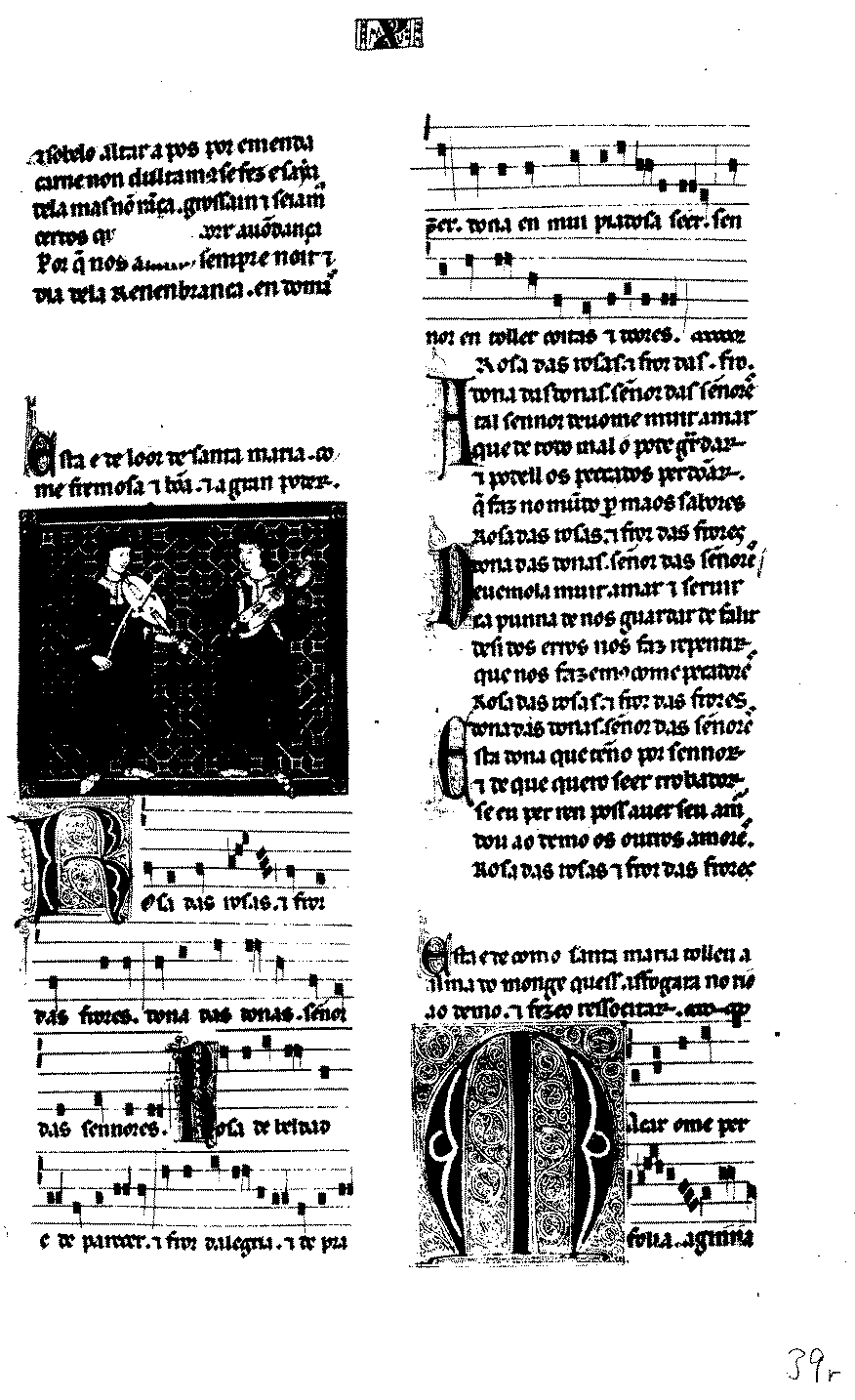
- a. 1284, Alfonso X of Castile, Cantigas de Santa Maria, Códice de los músicos, cantiga 10 (facsimile):
- Roſa das roſas. ⁊ fror / das frores. dona das donas. / ſeñor das ſennores.
- Rose of roses; And flower / of flowers. Woman of women; / Lady of ladies.
- Roſa das roſas. ⁊ fror / das frores. dona das donas. / ſeñor das ſennores.
- pink, rose (colour)
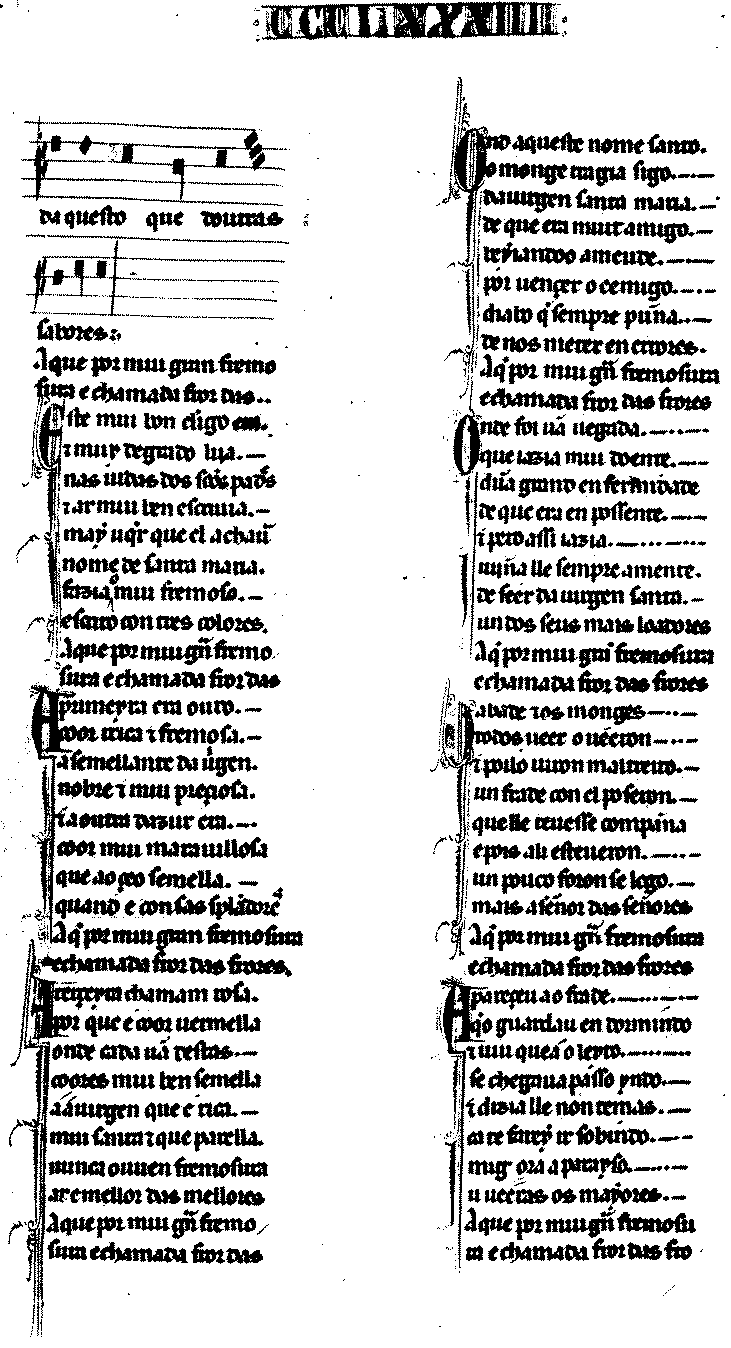
- a. 1284, Alfonso X of Castile, Cantigas de Santa Maria, Códice de los músicos, cantiga 384 (facsimile):
- A terçeyra chamam roſa / por que e coor uermella.
- The third [colour] they call rose, / because it is a reddish colour.
- A terçeyra chamam roſa / por que e coor uermella.
Descendants
See also
| branco, blanco, alvo | gris | negro, preto |
| vermelho | castanho | amarelo |
| verde | ||
| azur | ||
| cardẽo | rosa |
Pali
Alternative forms
Etymology
From the root rus. For the noun, inherited from Sanskrit रोष (roṣa, “anger”). For the verb, see rosati.
Noun
rosa m[1]
Declension
| Case / Number | Singular | Plural |
|---|---|---|
| Nominative (first) | roso | rosā |
| Accusative (second) | rosaṃ | rose |
| Instrumental (third) | rosena | rosehi or rosebhi |
| Dative (fourth) | rosassa or rosāya or rosatthaṃ | rosānaṃ |
| Ablative (fifth) | rosasmā or rosamhā or rosā | rosehi or rosebhi |
| Genitive (sixth) | rosassa | rosānaṃ |
| Locative (seventh) | rosasmiṃ or rosamhi or rose | rosesu |
| Vocative (calling) | rosa | rosā |
Verb
rosa
- imperative active second-person singular of rosati (“to annoy”)
References
Polish
Etymology
Inherited from Proto-Slavic *rosà.
Pronunciation
- IPA(key): /ˈrɔ.sa/
Audio: (file) - Rhymes: -ɔsa
- Syllabification: ro‧sa
- Homophone: Rosa
Noun
rosa f
- dew (any moisture from the atmosphere condensed by cool bodies upon their surfaces)
Declension
Further reading
- “rosa”, in Wielki słownik języka polskiego[3] (in Polish), Instytut Języka Polskiego PAN
- “rosa”, in Polish dictionaries at PWN[4] (in Polish)
- rosa in PWN's encyclopedia
Portuguese
Pronunciation
- (Brazil) IPA(key): /ˈʁɔ.zɐ/ [ˈhɔ.zɐ]
- (Rio de Janeiro) IPA(key): /ˈʁɔ.zɐ/ [ˈχɔ.zɐ]
- (Southern Brazil) IPA(key): /ˈʁɔ.za/ [ˈhɔ.za]
- (Portugal) IPA(key): /ˈʁɔ.zɐ/
- Hyphenation: ro‧sa
- Homophone: Rosa
Etymology 1
Inherited from Old Galician-Portuguese rosa, from Latin rosa (“rose”). Senses referring to the color are an ellipsis of cor-de-rosa. Compare French rose.
Noun
rosa f (plural rosas, diminutive rosinha or roseta or rosita)
- rose (flower)
Derived terms
- de rosas
- dia de rosas
- imprensa rosa
- leito de rosas
- mar de rosas
- maré de rosas
- não há rosas sem espinhos
- rosa de oiro
- rosa de ouro
- rosa dos rumos
- rosa dos ventos
- rosa mosqueta
- rosa náutica
- rosa-albardeira
- rosa-almiscarada
- rosa-bandalha
- rosa-branca
- rosa-brava
- rosa-canina
- rosa-chá
- rosa-cruz
- rosa-cruzismo
- rosa-cruzista
- rosa-da-china
- rosa-da-índia
- rosa-da-montanha
- rosa-da-rocha
- rosa-da-turquia
- rosa-de-alexandria
- rosa-de-bobo
- rosa-de-cão
- rosa-de-gueldres
- rosa-de-guelres
- rosa-de-jericó
- rosa-de-lobo
- rosa-de-madeira
- rosa-de-porcelana
- rosa-de-são-franciso
- rosa-de-toucar
- rosa-do-japão
- rosa-do-lobo
- rosa-francesa
- rosa-grega
- rosa-inca
- rosa-infalível
- rosa-madeira
- rosa-maluca
- rosa-maravilha
- rosa-marinha
- rosa-mijona
- rosa-mosqueta
- rosa-paulista
- rosa-primitiva
- rosa-rubra
- rosa-velho
- rosaça
- rosado
- rosal
- rosar
- roseira
- roseiral
- roseta (diminutive)
- rosinha (diminutive)
- rosita (diminutive)
Related terms
Descendants
- → Tamil: ரோஜா (rōjā)
Adjective
rosa (invariable, diminutive rosinho)
- pink (color)
- Synonym: cor-de-rosa
Noun
rosa m (plural rosas, diminutive rosinha)
- pink (color)
- Synonym: cor-de-rosa
- Hyponyms: rosa-choque, pink
Derived terms
- rosa-bebê (Brazil), rosa-bebé (Portugal)
- rosa-choque
- rosa-claro
- rosa-escuro
- rosa-maravilha
- rosa-pink
- rosa-shocking
Etymology 2
See the etymology of the corresponding lemma form.
Verb
rosa
- inflection of rosar:
- third-person singular present indicative
- second-person singular imperative
See also
| branco, alvo | cinza, gris, cinzento |
preto, negro |
| vermelho, encarnado, rubro, salmão; carmim |
laranja, cor de laranja; castanho, marrom |
amarelo; creme, ocre |
| verde-limão | verde | verde-água; verde-menta |
| ciano, turquesa; azul-petróleo |
azul-bebê / azul-bebé, azul-celeste | azul, índigo, anil |
| violeta, lilás |
magenta; roxo, púrpura | rosa, cor-de-rosa, rosa-choque |
Further reading
- “rosa”, in Dicionário Aulete Digital (in Portuguese), Rio de Janeiro: Lexikon Editora Digital, 2008–2026
- “rosa”, in Dicio – Dicionário Online de Português (in Portuguese), São Paulo: 7Graus, 2009–2026
- “rosa”, in Dicionário da Língua Portuguesa (in Portuguese), Lisboa: Academia das Ciências de Lisboa, 2001–2026
- “rosa”, in Dicionário infopédia da Lingua Portuguesa (in Portuguese), Porto: Porto Editora, 2003–2026
- “rosa”, in Michaelis Dicionário Brasileiro da Língua Portuguesa (in Portuguese), São Paulo: Editora Melhoramentos, 2015–2026, →ISBN
- “rosa”, in Dicionário Priberam da Língua Portuguesa (in Portuguese), Lisbon: Priberam, 2008–2026
Romansh
Alternative forms
Etymology
Noun
rosa f (plural rosas)
Sardinian
Alternative forms
Etymology
From Latin rosa, of disputed origin.
Pronunciation
- IPA(key): /ˈrosa/
Noun
rosa f (plural rosas)
- rose (flower)
Derived terms
- rosa cràbina
- rosa de padenti
- rosa de su berveghinu
- rosa caddina
- rosa canina
Noun
rosa f (uncountable)
- pink (color/colour)
Adjective
1=-Please see Module:checkparams for help with this warning.
rosa (plural rosas)
- pink (color/colour)
Derived terms
References
- Rubattu, Antoninu (2006), Dizionario universale della lingua di Sardegna, 2nd edition, Sassari: Edes
Sassarese
Etymology
Pronunciation
- IPA(key): /ˈrɔza/
Noun
rosa m (plural rosi)
- rose (flower)
Derived terms
- rosa arestha
- rosaredda
Noun
rosa m (uncountable)
- pink (color/colour)
- chicken pox (childhood disease)
- Synonym: baglioru basthardhu
Adjective
rosa (invariable)
- pink (color/colour)
Related terms
- rosaddu
References
- Rubattu, Antoninu (2006), Dizionario universale della lingua di Sardegna, 2nd edition, Sassari: Edes
Serbo-Croatian
Etymology
From Proto-Slavic *rosà, from Proto-Balto-Slavic *rasā́ˀ, from Proto-Indo-European *h₁rṓs.
Pronunciation
- IPA(key): /rǒsa/
- Hyphenation: ro‧sa
Noun
ròsa f (Cyrillic spelling ро̀са)
Declension
| singular | plural | |
|---|---|---|
| nominative | ròsa | rȍse |
| genitive | ròsē | rósā |
| dative | rȍsi | ròsama |
| accusative | rȍsu | rȍse |
| vocative | rȍso | rȍse |
| locative | ròsi | ròsama |
| instrumental | ròsōm | ròsama |
Further reading
- “rosa”, in Hrvatski jezični portal [Croatian language portal] (in Serbo-Croatian), 2006–2026
Slovak
Etymology
From Proto-Slavic *rosà, from Proto-Balto-Slavic *rasā́ˀ, from Proto-Indo-European *h₁rṓs.
Pronunciation
- IPA(key): /rɔsa/, [ˈrɔsa]
- Rhymes: -ɔsa
- Hyphenation: ro‧sa
Noun
rosa f (genitive singular rosy, nominative plural rosy, genitive plural rôs, declension pattern of žena)
Declension
| singular | plural | |
|---|---|---|
| nominative | rosa | rosy |
| genitive | rosy | rôs |
| dative | rose | rosám |
| accusative | rosu | rosy |
| locative | rose | rosách |
| instrumental | rosou | rosami |
References
- “rosa”, in Slovníkový portál Jazykovedného ústavu Ľ. Štúra SAV [Dictionary portal of the Ľ. Štúr Institute of Linguistics, Slovak Academy of Science] (in Slovak), https://slovnik.juls.savba.sk, 2003–2026
Slovene
Etymology
From Proto-Slavic *rosà, from Proto-Indo-European *h₁rṓs. First attested in the 16th century.
Pronunciation
- IPA(key): /rɔ̀ːsa/
Noun
rósa f
- dew (moisture in the air that settles on plants, etc.)
Declension
| Feminine, a-stem | ||
|---|---|---|
| nominative | rôsa | |
| genitive | rôse | |
| singular | ||
| nominative (imenovȃlnik) |
rôsa | |
| genitive (rodȋlnik) |
rôse | |
| dative (dajȃlnik) |
rôsi | |
| accusative (tožȋlnik) |
rôso | |
| locative (mẹ̑stnik) |
rôsi | |
| instrumental (orọ̑dnik) |
rôso | |
| Feminine, a-stem, long mixed accent | ||
|---|---|---|
| nominative | rôsa | |
| genitive | rosé | |
| singular | ||
| nominative (imenovȃlnik) |
rôsa | |
| genitive (rodȋlnik) |
rosé | |
| dative (dajȃlnik) |
rôsi | |
| accusative (tožȋlnik) |
rosó | |
| locative (mẹ̑stnik) |
rôsi | |
| instrumental (orọ̑dnik) |
rosó | |
Further reading
- “rosa”, in Slovarji Inštituta za slovenski jezik Frana Ramovša ZRC SAZU, portal Fran
- “rosa”, in Termania, Amebis
- See also the general references
Spanish
Etymology
From Old Spanish rosa, a semi-learned borrowing from Latin rosa (the expected inherited form would be *ruesa).[1]
Pronunciation
- IPA(key): /ˈrosa/ [ˈro.sa]
Audio (Colombia): (file) - Rhymes: -osa
- Syllabification: ro‧sa
Noun
rosa f (plural rosas)
- rose (flower)
- pink (color/colour)
- 2024 February 25, Peter Valdes-Dapena, “La Cybertruck de Tesla es impresionante pero también preocupante”, in CNN en Español[5]:
- Incluso cuando estacioné una Cybertruck Tesla alquilada junto a un supercoche McLaren de color rosa intenso en el aparcamiento de un centro comercial de California, la gente del McLaren no paraba de hablar de la Cybertruck.
- (please add an English translation of this quotation)
- (heraldry) rose
Derived terms
- camino de rosas
- cara de rosa
- como las propias rosas
- como una rosa
- de rositas
- estar más fresco que una rosa
- geranio de rosa
- hecho una rosa
- lecho de rosas
- Leyenda Rosa
- mal de la rosa
- no hay rosa sin espina
- palo de rosa
- palo rosa
- prensa rosa
- revista rosa
- rosa amarilla
- rosa china
- rosa de alabastro
- rosa de Jericó
- rosa de los vientos
- rosa de Navidad
- rosa de rejalgar
- rosa de té
- rosa del azafrán
- rosa japonesa
- rosa mexicano
- rosa mosqueta
- rosa palo
- rosear
- salsa rosa
Related terms
Descendants
- → Cebuano: rosa
- → Classical Nahuatl: rosa
- → Zoogocho Zapotec: ros
- →⇒ Cebuano: rosas (via rosas (pl.))
- →⇒ Tagalog: rosas (via rosas (pl.))
Adjective
rosa m or f (masculine and feminine plural rosa or rosas)
Usage notes
- The adjective rosa does not undergo inflection in gender. Thus, whether modifying a masculine or feminine noun, one should use rosa and never "roso".
See also
| blanco | gris | negro |
| rojo; carmín, carmesí | naranja, anaranjado; marrón | amarillo; crema |
| lima | verde | menta |
| cian, turquesa; azul-petróleo | celeste, cerúleo | azul |
| violeta; añil, índigo | magenta; morado, púrpura | rosa, rosado |
References
- ^ Coromines, Joan; Pascual, José Antonio (1983–1991), “rosa”, in Diccionario crítico etimológico castellano e hispánico [Critical Castilian and Hispanic etymological dictionary][1] (in Spanish), Madrid: Gredos
Further reading
- “rosa”, in Diccionario de la lengua española [Dictionary of the Spanish Language] (in Spanish), online version 23.8.1, Royal Spanish Academy [Spanish: Real Academia Española], 15 December 2025
- “rosa”, in Tesoro de los diccionarios históricos de la lengua española [Thesaurus of the Historical Dictionaries of the Spanish Language], Royal Spanish Academy [Spanish: Real Academia Española], launched 2021
- Seco, Manuel; Andrés, Olimpia; Ramos, Gabino (2023), “rosa”, in Diccionario del español actual (in Spanish), third digital edition, Fundación BBVA
Anagrams
Swedish
Pronunciation
- IPA(key): /ˈroːˌsa/, /ˈruːˌsa/
Audio: (file) - Hyphenation: ro‧sa
Etymology 1
From a Romance language, likely via German, from French rose.
Noun
rosa n
Adjective
rosa (not comparable, indeclinable)
- pink (color/colour)
- en rosa kanin
- a pink rabbit
- ett rosa hus
- a pink house
- rosa rosor
- pink roses
Derived terms
- chockrosa (“shocking pink”)
See also
| vit | grå | svart |
| röd; karmosin, karmosinröd, blodröd | orange (common), brandgul (now uncommon); brun | gul; beige |
| limegrön | grön | mintgrön |
| turkos (common), cyan (rare); blågrön, teal | himmelsblå, azur | blå |
| lila, violett, gredelin (light lavender, now uncommon); indigo | magenta; purpur | rosa (common), skär (uncommon) |
Etymology 2
From Old Swedish rosa, from Old Norse hrósa, from the same root as hróðr (“praise”), from Proto-Germanic *hrōþrą. Cognate with Danish rose. Compare German Ruhm (“glory”), Gothic 𐌷𐍂𐍉𐌸𐌴𐌹𐌲𐍃 (hrōþeigs, “glorious”). Related to berömma.
Verb
rosa (present rosar, preterite rosade, supine rosat, imperative rosa)
Conjugation
| active | passive | |||
|---|---|---|---|---|
| infinitive | rosa | rosas | ||
| supine | rosat | rosats | ||
| imperative | rosa | — | ||
| imper. plural1 | rosen | — | ||
| present | past | present | past | |
| indicative | rosar | rosade | rosas | rosades |
| ind. plural1 | rosa | rosade | rosas | rosades |
| subjunctive2 | rose | rosade | roses | rosades |
| present participle | rosande | |||
| past participle | rosad | |||
1 Archaic. 2 Dated. See the appendix on Swedish verbs.
Derived terms
- kritikerrosad
- ros (“praise, acclaim”)
References
- “rosa”, in Svensk ordbok [Dictionary of Swedish] (in Swedish)
- “rosa”, in Svenska Akademiens ordlista [Wordlist of the Swedish Academy] (in Swedish)
- “rosa”, in Svenska Akademiens ordbok [Dictionary of the Swedish Academy] (in Swedish)
- rosa in Elof Hellquist, Svensk etymologisk ordbok (1st ed., 1922)
Anagrams
Upper Sorbian
Etymology
Inherited from Proto-Slavic *rosà.
Pronunciation
- IPA(key): /ˈʀɔsa/
- Rhymes: -ɔsa
- Hyphenation: ro‧sa
- Syllabification: ro‧sa
Noun
rosa f
- dew (water droplets originating from the condensation of water vapor from the atmospheric layer in contact with the earth's surface, formed during the night by cooling of that surface and objects exposed to heat loss by irradiation)
Declension
References
- “rosa” in Soblex