via
Bavarian • Catalan • Danish • Dutch • Esperanto • Fijian • Finnish • Franco-Provençal • French • Galician • German • Italian • Latin • Norwegian Bokmål • Norwegian Nynorsk • Old Galician-Portuguese • Portuguese • Romanian • Romansh • Swedish
Page categories
English
Pronunciation
- IPA(key): /ˈvaɪə/, /ˈviː.ə/
Audio (UK): (file) Audio (General American): (file) - Rhymes: -aɪə, -iːə
Etymology 1
Borrowed from Latin via (“road”), possibly from Proto-Indo-European *weǵʰ-. Possible doublet of way. The sense in electronics is also explained as vertical interconnect access.
Noun
- A main road or highway, especially in ancient Rome. (Mainly used in set phrases, below.)
- (electronics) A small hole in a printed circuit board filled with metal which connects two or more layers.
- (electronics) An electrical connection which connects two or more layers on a printed circuit board or an integrated circuit.
Derived terms
Related terms
Translations
|
|
Etymology 2
Borrowed from Latin viā (“by the way (of)”), ablative singular of via (“way, road”), from Proto-Indo-European *weǵʰ-.
Compare typologically Polish drogą, Russian путём (putjóm).
Alternative forms
Preposition
via
- By way of; passing through.
- They drove from New York to Los Angeles via Omaha.
- You can enter the building via the western gate.
- By (means of); using.
- I'll send you the information via e-mail.
- 2005, “Capacity Bounds For MIMO Poisson Channels With Intersymbol Interference, Appendix C”, in Enrico Forestieri, editor, Optical Communication Theory and Techniques, →ISBN, page 44:
- Under the assumptions of Proposition 5 the entropies h(τ) and H(k) are related via the following equation: […]
- 2012 December 1, “An internet of airborne things”, in The Economist[1], volume 405, number 8813, archived from the original on 11 March 2023, page 3 (Technology Quarterly):
- A farmer could place an order for a new tractor part by text message and pay for it by mobile money-transfer. A supplier many miles away would then take the part to the local matternet station for airborne dispatch via drone.
- 2017 February 10, Rosie Gray, “Behind the Internet's Anti-Democracy Movement”, in The Atlantic[2], archived from the original on 10 January 2020:
- White House chief strategist Steve Bannon has been in contact via intermediaries with Curtis Yarvin, Politico Magazine reported this week.
Translations
|
|
Interjection
via
- (obsolete) Away! Be off!
Anagrams
Bavarian
Numeral
via
- alternative spelling of vier (“four”)
Catalan
Etymology
Pronunciation
- IPA(key): (Central) [ˈbi.ə]
- IPA(key): (Balearic) [ˈvi.ə]
- IPA(key): (Valencia) [ˈvi.a]
Audio (Barcelona): (file) - Rhymes: -ia
Noun
via f (plural vies)
- lane
- way, path
- railway track
- Synonym: via fèrria
- channel
Derived terms
- autovia
- fer via
- ferrovia
- via aèria
- via ampla
- via d'aigua
- via doble
- via fluvial
- Via Làctia
- via morta
- via pública
- via terrestre
Related terms
Preposition
via
Further reading
- “via”, in Diccionari de la llengua catalana [Dictionary of the Catalan Language] (in Catalan), second edition, Institute of Catalan Studies [Catalan: Institut d'Estudis Catalans], April 2007
- “via”, in Gran Diccionari de la Llengua Catalana, Grup Enciclopèdia Catalana, 2026
- “via” in Diccionari normatiu valencià, Acadèmia Valenciana de la Llengua.
- Alcover, Antoni Maria; Moll, Francesc de Borja (1963), “via”, in Diccionari català-valencià-balear (in Catalan)
Danish
Etymology
Pronunciation
- IPA(key): /ˈviːæ/, /ˈviæ/
Preposition
via
- via; by way of; passing through.
- Familien kørte til Aalborg via Aarhus.
- The family drove to Aalborg via Aarhus.
- via, by means of, using.
- Bestillingen kan betales via smartphone
- The order can be paid for via smartphone
Synonyms
- (passing through): over, gennem
- (by means of): ved hjælp af, gennem
References
- “via” in Den Danske Ordbog
Dutch
Etymology
Borrowed from Latin viā, the ablative of via (“road, way”), of uncertain origin, plausibly cognate with vehere (“to conduct”). Entered Dutch in the Latin phrase per via de (“by way of”), after the Portuguese por via de.
Pronunciation
- IPA(key): /ˈvi.aː/
Audio: (file) - Hyphenation: via
Preposition
via
Derived terms
- via via (“using various intermediaries”)
Esperanto
Etymology
Pronunciation
- IPA(key): /ˈvia/
Audio 1: (file) Audio 2: (file) Audio 3: (file) - Rhymes: -ia
- Syllabification: vi‧a
Determiner
via (accusative singular vian, plural viaj, accusative plural viajn)
See also
| singular | plural | |||||||
|---|---|---|---|---|---|---|---|---|
| nominative | accusative | possessive | nominative | accusative | possessive | |||
| first person | mi | min | mia | ni | nin | nia | ||
| second person |
formal | vi | vin | via | vi | vin | via | |
| familiar1 | ci | cin | cia | |||||
| third person |
masculine | li | lin | lia | ||||
| feminine | ŝi | ŝin | ŝia | |||||
| neuter | ĝi | ĝin | ĝia | |||||
| gender-neutral2 | ri ŝli |
rin ŝlin |
ria ŝlia | |||||
| reflexive | si | sin | sia | si | sin | sia | ||
| indefinite | oni | onin | onia | oni | onin | onia | ||
1 Rare.
2 Not widely used.
Further reading
- “via”, in Plena Ilustrita Vortaro de Esperanto [Complete Illustrated Dictionary of Esperanto], 2020, →ISBN
- “via”, in Reta Vortaro [Online Dictionary] (in Esperanto), 1997-2026
Fijian
Etymology
From Proto-Central Pacific *via, from Proto-Oceanic *piʀaq, from Proto-Malayo-Polynesian *biʀaq (compare Malay birah), from Proto-Austronesian *biʀaq.
Noun
via
Finnish
Etymology
Borrowed from Latin viā, the ablative of via (“road, way”).
Pronunciation
- IPA(key): /ˈʋiɑ/, [ˈʋiɑ̝]
- Rhymes: -iɑ
- Syllabification(key): vi‧a
- Hyphenation(key): via
Adverb
via
Further reading
- “via”, in Kielitoimiston sanakirja [Dictionary of Contemporary Finnish][3] (in Finnish) (online dictionary, continuously updated), Kotimaisten kielten keskuksen verkkojulkaisuja 35, Helsinki: Kotimaisten kielten tutkimuskeskus (Institute for the Languages of Finland), 2004–, retrieved 4 July 2023
Anagrams
Franco-Provençal
Etymology
Noun
via f (plural vies) (ORB, broad)
References
- vie in DicoFranPro: Dictionnaire Français/Francoprovençal – on dicofranpro.llm.umontreal.ca
- via in Lo trèsor Arpitan – on arpitan.eu
French
Etymology
Borrowed from Latin viā, the ablative of via (“road, way”), of uncertain origin, plausibly cognate with vehō (“convey”).
Pronunciation
Preposition
via
Further reading
- “via”, in Trésor de la langue française informatisé [Digitized Treasury of the French Language], 2012
Galician
Verb
via
- (reintegrationist norm) first/third-person singular imperfect indicative of ver
German
Etymology
Ultimately from Latin viā, the ablative of via (“road, way”). Cognate with English via, Danish via, Dutch via, Norwegian Bokmål via.
Pronunciation
Preposition
via [with accusative]
Related terms
Further reading
Italian
Etymology
Pronunciation
- IPA(key): /ˈvi.a/
Audio: (file) Audio: (file) - Rhymes: -ia
- Hyphenation: vì‧a
Noun
via f (plural vie)
- street, path
- Synonym: strada
- way, route
- means (to an end)
- tract (in the body)
- per via orale ― orally (literally, “through oral tract”)
- start (of a race)
Derived terms
- andare via
- crocevia
- dare il via a
- dare il via libera a
- ferrovia
- in via provvisoria
- sviare
- tramvia
- via libera
- via via
- viabile
- viale
- viavai
- vie aeree
- viottolo
- viuzza
Related terms
Adverb
via
Further reading
- via1 in Treccani.it – Vocabolario Treccani on line, Istituto dell'Enciclopedia Italiana
- via2 in Treccani.it – Vocabolario Treccani on line, Istituto dell'Enciclopedia Italiana
Anagrams
Latin
Etymology
From Proto-Italic *wijā, from Proto-Indo-European *wih₁eh₂-,[1] from *weyh₁- (“to pursue, be strong”). Cognate with Lithuanian vyti (“to pursue”). See also vīs, invītus, invītō, Ancient Greek οἶμος (oîmos). Alternatively, from Proto-Indo-European *weǵʰyeh₂-, from *weǵʰ- (whence vehō and English way).[2] This hypothesis is rejected by De Vaan.
Pronunciation
- (Classical Latin) IPA(key): [ˈwi.a]
- (modern Italianate Ecclesiastical) IPA(key): [ˈviː.a]
Noun
via f (genitive viae); first declension
- road, street, path
- Synonym: platea
- Hyphenation: via agrāria, lane
- highway
- Antonym: sēmita
- way, method, manner, mode
- the right way
- (figuratively) journey, course, route
- Synonym: iter
- c. 347 CE – 420 CE, Hieronymus, Vulgate Proverbs.30.19:
- viam aquilae in caelō viam colubrī super petram viam nāvis in mediō marī et viam virī in adulēscentulā
- The way of an eagle in the air, the way of a serpent upon a rock, the way of a ship in the midst of the sea, and the way of a man in youth. (Douay-Rheims trans., Challoner rev.; 1752 CE)
- viam aquilae in caelō viam colubrī super petram viam nāvis in mediō marī et viam virī in adulēscentulā
Declension
First-declension noun.
| singular | plural | |
|---|---|---|
| nominative | via | viae |
| genitive | viae | viārum |
| dative | viae | viīs |
| accusative | viam | viās |
| ablative | viā | viīs |
| vocative | via | viae |
Derived terms
Related terms
Descendants
References
- ^ De Vaan, Michiel (2008), “via”, in Etymological Dictionary of Latin and the other Italic Languages (Leiden Indo-European Etymological Dictionary Series; 7), Leiden, Boston: Brill, →ISBN, pages 673-4
- ^ Edward A. Roberts, Bárbara Pastor, Diccionario etimológico indoeuropeo de la lengua española, Alianza Editorial 2009, →ISBN
Further reading
- “via”, in Charlton T. Lewis and Charles Short (1879), A Latin Dictionary, Oxford: Clarendon Press
- “via”, in Charlton T. Lewis (1891), An Elementary Latin Dictionary, New York: Harper & Brothers
- "via", in Charles du Fresne du Cange, Glossarium Mediæ et Infimæ Latinitatis (augmented edition with additions by D. P. Carpenterius, Adelungius and others, edited by Léopold Favre, 1883–1887)
- “via”, in Gaffiot, Félix (1934), Dictionnaire illustré latin-français, Hachette.
- Carl Meißner; Henry William Auden (1894), Latin Phrase-Book[5], London: Macmillan and Co.
- the country-house stands near the road: villa tangit viam
- the road is the same length: tantundem viae est
- to pave a road: viam sternere (silice, saxo)
- to make a gravel path: substruere viam glarea (Liv. 41. 27)
- a street, a made road: via strata
- a well-trodden, much-frequented way: via trita
- to make a road: viam munire
- to open a route: viam patefacere, aperire
- to cut one's way (through the enemies' ranks): ferro viam facere (per confertos hostes)
- to obstruct a road; to close a route: viam intercludere
- a road leads somewhere: via fert, ducit aliquo
- to set out on a journey: in viam se dare
- to set out on a journey: viae se committere
- to enter upon a route; to take a road: viam ingredi, inire (also metaphorically)
- to turn aside from the right way; to deviate: de via declinare, deflectere (also metaphorically)
- make way for any one: (de via) decedere alicui
- to set out by the Appian road: Appia via proficisci
- to direct a person who has lost his way: erranti viam monstrare
- to continue one's journey, pursue one's course: viam persequi (also metaphorically)
- to accomplish a long journey: longam viam conficere
- weary with travelling; way-worn: fessus de via
- in a straight line: recta (regione, via); in directum
- to bring a person back to the right way: in viam reducere aliquem
- to return to the right way: in viam redire
- to enter upon a career: viam vitae ingredi (Flacc. 42. 105)
- to give a scientific explanation of a thing: artificio et via tradere aliquid
- to proceed, carry on a discussion logically: ratione et via, via et ratione progredi, disputare (Or. 33. 116)
- to walk in the ways of virtue: viam virtutis ingredi (Off. 1. 32. 118)
- to receive tenders for the construction of temples, highroads: locare aedes, vias faciendas (Phil. 9. 7. 16)
- the country-house stands near the road: villa tangit viam
- “via”, in Harry Thurston Peck, editor (1898), Harper’s Dictionary of Classical Antiquities, New York: Harper & Brothers
- Pokorny, Julius (1959), Indogermanisches etymologisches Wörterbuch [Indo-European Etymological Dictionary] (in German), Bern, München: Francke Verlag
Norwegian Bokmål
Etymology 1
Preposition
via
Etymology 2
Alternative forms
Verb
via
- inflection of vie:
- simple past
- past participle
References
- “via” in The Bokmål Dictionary.
Norwegian Nynorsk
Etymology 1
Pronunciation
- IPA(key): /ˈʋiː.ɑ/
Preposition
via
Etymology 2
From earlier form vigja, from Old Norse vígja, from Proto-Germanic *wīhijaną.
Alternative forms
Pronunciation
- IPA(key): /²ʋiː.ɑ/
Verb
via (present tense vier, past tense vigde, supine vigd or vigt, past participle vigd, present participle viande, imperative vi)
- (transitive) to dedicate, commit
- (transitive) to consecrate, to hallow
- (transitive) to wed
Derived terms
Related terms
References
- “via” in The Nynorsk Dictionary.
Anagrams
Old Galician-Portuguese
Pronunciation
- IPA(key): /ˈβi.a/
Etymology 1
Inherited from Latin via, from Proto-Italic *wijā, from Proto-Indo-European *weyh₁-.
Noun
via f (plural vias)
- a way; a path
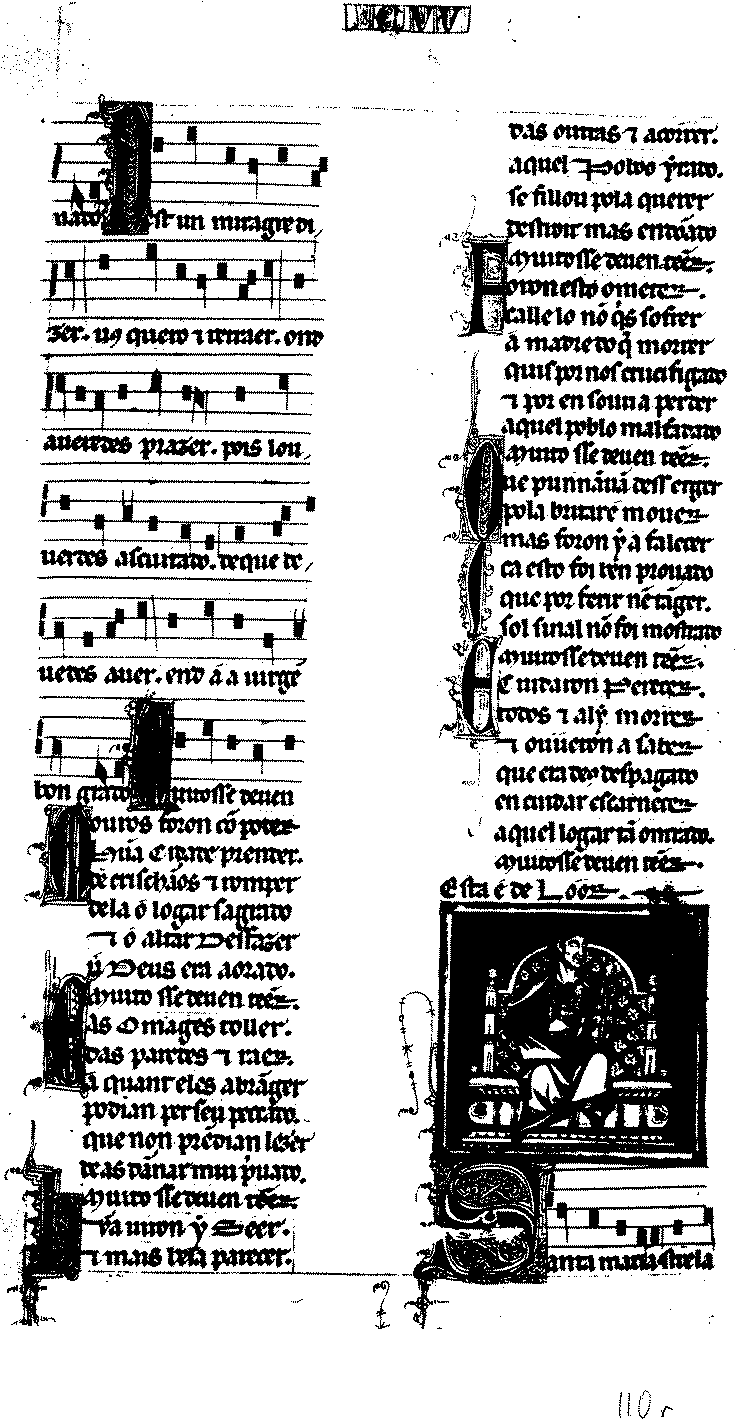
- a. 1284, Alfonso X of Castile, Cantigas de Santa Maria, Códice de los músicos, cantiga 100 (facsimile):
- Santa maria / ſtrela do dia / moſtra nos uia / pera deus ⁊ nos guia.
- Holy Mary, / star of the daytime; / show us the way / towards God, and guide us.
- Santa maria / ſtrela do dia / moſtra nos uia / pera deus ⁊ nos guia.
Etymology 2
See the etymology of the corresponding lemma form.
Verb
via
- first/third-person singular imperfect indicative of veer
Portuguese
Pronunciation
- (Brazil) IPA(key): /ˈvi.ɐ/
- (Southern Brazil) IPA(key): /ˈvi.a/
- (Portugal) IPA(key): /ˈvi.ɐ/
- (Northern Portugal) IPA(key): /ˈbi.ɐ/
Etymology 1
Inherited from Old Galician-Portuguese via, from Latin via, from Proto-Italic *wijā, from Proto-Indo-European *weyh₁-.
Noun
via f (plural vias)
- a way; a path
- Synonym: caminho
- (rail transport) gauge (distance between the rails of a railway)
- Synonym: bitola
- medium (means or channel by which an aim is achieved)
- an example of a document
Derived terms
- por via de regra
- via de salvação
- via do paraíso
- via executiva
- via férrea
- via pública
- via purgativa
- via-sacra
Related terms
Etymology 2
Learned borrowing from Latin viā (“by way of”).
Preposition
via
Noun
via f (plural vias)
- (historical) via (road built by the ancient Romans)
Etymology 3
See the etymology of the corresponding lemma form.
Verb
via
- first/third-person singular imperfect indicative of ver
Further reading
- “via”, in Dicionário Aulete Digital (in Portuguese), Rio de Janeiro: Lexikon Editora Digital, 2008–2026
- “via”, in Dicionário Priberam da Língua Portuguesa (in Portuguese), Lisbon: Priberam, 2008–2026
Romanian
Etymology 1
Borrowed from French and Latin via.
Pronunciation
- IPA(key): /ˈvi.a/
Preposition
via (+accusative)
Etymology 2
From an older form vie, from Latin vīvere, from Proto-Italic *gʷīwō, from Proto-Indo-European *gʷíh₃weti (“to live, be alive”).
Alternative forms
- vie — regional, archaic
Pronunciation
- IPA(key): /viˈa/
Verb
a via (third-person singular present viază, past participle viat) 1st conjugation
Conjugation
| infinitive | a via | ||||||
|---|---|---|---|---|---|---|---|
| gerund | viind | ||||||
| past participle | viat | ||||||
| number | singular | plural | |||||
| person | 1st person | 2nd person | 3rd person | 1st person | 2nd person | 3rd person | |
| indicative | eu | tu | el/ea | noi | voi | ei/ele | |
| present | viez | viezi | viază | viem | viați | viază | |
| imperfect | viam | viai | via | viam | viați | viau | |
| simple perfect | viai | viași | vie | viarăm | viarăți | viară | |
| pluperfect | viasem | viaseși | viase | viaserăm | viaserăți | viaseră | |
| subjunctive | eu | tu | el/ea | noi | voi | ei/ele | |
| present | să viez | să viezi | să vieze | să viem | să viați | să vieze | |
| imperative | — | tu | — | — | voi | — | |
| affirmative | viază | viați | |||||
| negative | nu via | nu viați | |||||
Synonyms
Derived terms
Related terms
Etymology 3
Form of the adjective viu.
Pronunciation
- IPA(key): /ˈvi.a/
Adjective
via
- definite feminine singular nominative/accusative of viu (“live, alive”)
Etymology 4
Form of the noun vie.
Pronunciation
- IPA(key): /ˈvi.a/
Noun
via
Romansh
Alternative forms
Etymology
Noun
via f (plural vias)
Synonyms
- (Rumantsch Grischun, Sutsilvan: road, street) strada
Swedish
Preposition
via